V6 Family Flexibility or Turbo Torque, Cargo Space and Super Cruise for Central Kentucky?
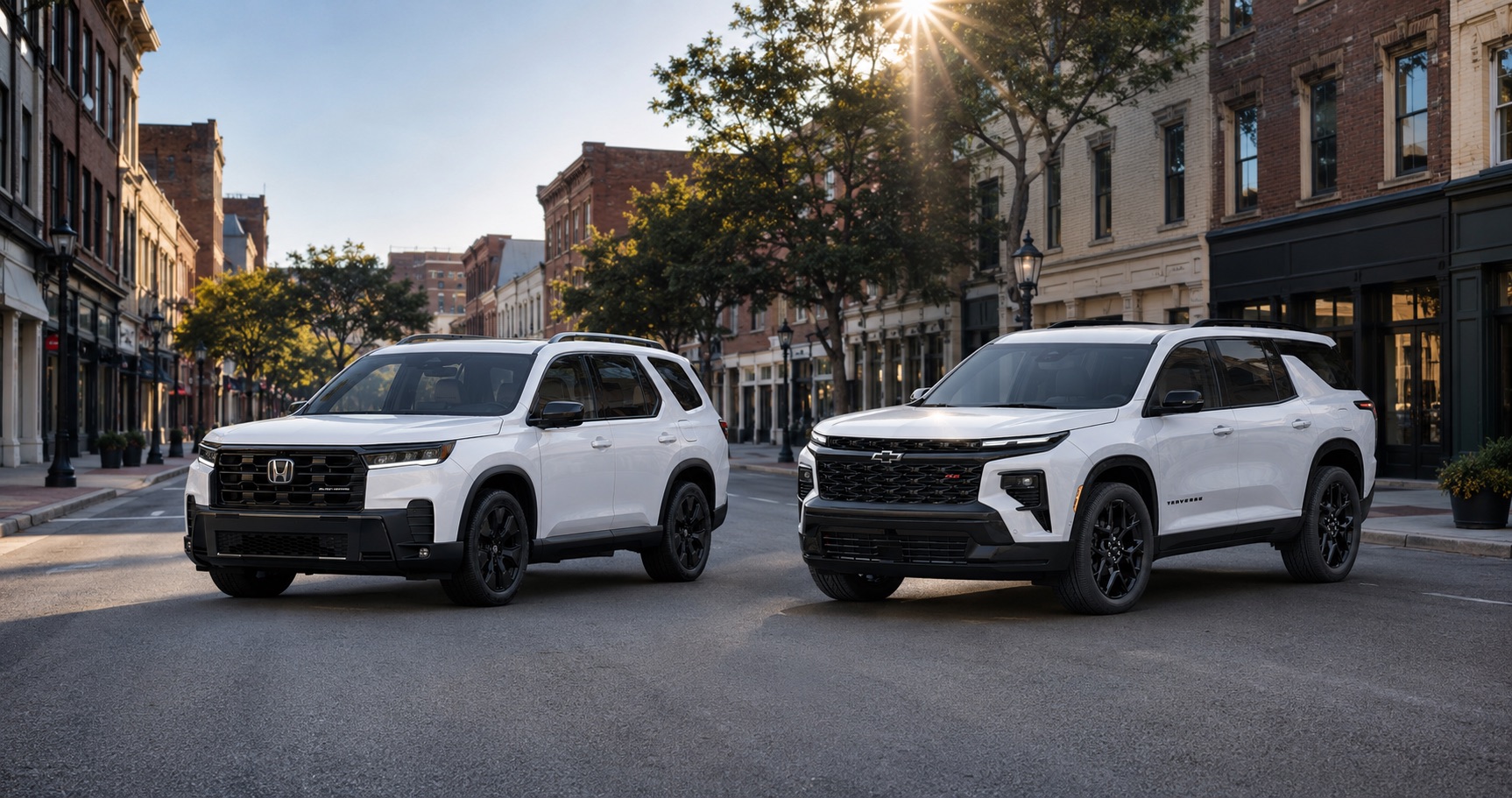
The 2026 Honda Pilot and 2026 Chevy Traverse overlap in the part of the three-row SUV market where family utility matters more than badge prestige. Both can seat up to eight in the right configuration, both offer front- or all-wheel drive, and both can reach a 5,000-pound towing ceiling when properly configured. The real decision starts with how differently they solve those same jobs.
Pilot uses a 285-hp naturally aspirated V6 and 10-speed automatic across seven trims, then changes the experience through seating flexibility, comfort and TrailSport capability. Traverse uses a 328-hp turbocharged four-cylinder and 8-speed automatic across four trims, while differentiating itself with stronger torque, a small all-rows-up cargo edge, available Super Cruise and Z71's advanced twin-clutch AWD hardware.
For families around Elizabethtown, Radcliff, Vine Grove, Fort Knox and the I-65 corridor, the useful comparison is practical: passenger mix, school and work schedules, weekend cargo, highway travel, towing and the roads you actually use. Fuel economy is close enough that it rarely settles the issue by itself; packaging, cargo, driver technology and powertrain character do more of the separating.
Which 3-Row SUV Fits the Way Your Family Actually Uses It?
Choose the priority that most strongly shapes your decision. The result is a first direction, not a verdict; the comparison panels below pressure-test it against powertrain, MPG, seating, cargo, towing, AWD, technology, reliability and price.
Based on This Priority
V6 Powertrain & Flexible Seating Matter
Start With the Pilot
Who This Favors
Families that want a naturally aspirated V6, a 10-speed automatic and the option to switch several trims between an eight-seat bench and a center-seat-open layout.
Why It Points Here
Pilot keeps the same 285-hp V6/10-speed formula across all seven trims, while EX-L and several upper trims add the removable/stowable second-row center seat.
Pilot vs Traverse in 60 SecondsFive factual differences most likely to shape your test drive▼
What is the biggest Pilot vs Traverse difference? Pilot centers on a naturally aspirated V6, flexible second-row packaging and TrailSport. Traverse centers on stronger turbo-four output, larger published cargo figures, available Super Cruise and the Z71 twin-clutch AWD system.
Which has more power? Traverse leads with 328 horsepower and 326 lb-ft of torque. Pilot makes 285 horsepower and 262 lb-ft from its naturally aspirated V6.
Which has more cargo room? It depends on how the seats are being used. Traverse lists 22.9 cubic feet with all three rows in use, while Pilot figures range from 18.6 to 22.4 by trim. Fold the rear rows and Honda's published Pilot maximums rise higher, so neither SUV owns every cargo measurement.
Which has better fuel economy? Neither creates a major advantage. Comparable front-drive versions are around 22 combined MPG and comparable AWD versions around 21 combined MPG; Pilot TrailSport is rated at 20 combined.
Which is better for towing or rough-road use? Both can reach a 5,000-pound maximum in the relevant properly equipped configurations. For rough-road hardware, TrailSport has more ground clearance and TrailWatch, while Z71 brings advanced twin-clutch AWD, Terrain Mode and Hill Descent Control.
Compare the Tradeoffs Behind the Pilot-vs-Traverse Decision
Both SUVs cover the same core family mission, so the useful comparison is not a generic feature count. Use the topics below to isolate the separating questions: V6 versus turbo torque, passenger packaging, cargo, TrailSport versus Z71, Super Cruise, ownership evidence and the trim role you would actually buy.
Start With the Family-SUV Requirement That Matters Most
Start Here
Pilot Emphasizes V6 Flexibility; Traverse Emphasizes Turbo Torque and Super Cruise
Both solve the core three-row family job, but their strongest reasons to buy are different.
2026 Honda Pilot vs 2026 Chevy Traverse at a Glance
Category
2026 Honda Pilot
2026 Chevrolet Traverse
Best For
Naturally aspirated V6 and 10-speed automatic
Flexible second-row center-seat packaging on several trims
TrailSport capability and a deeper seven-trim ladder
Stronger turbo torque and horsepower
Slightly more published space with all three rows upright
Z71: advanced twin-clutch AWD, all-terrain tires, off-road suspension, skid plate, Terrain Mode, Hill Descent Control
Hands-Free Highway Driving
No hands-free highway system offered Honda Sensing driver-assistance suite is standard
Super Cruise: standard on High Country and RS; available on LT and Z71 with the applicable package
Shopper-level differences only. Honda publishes both standard and maximum cargo measurements that vary by trim; Chevrolet publishes one cargo figure for each seating position. Cross-brand cargo methods are not guaranteed identical. Exact trim, drivetrain, seating configuration and option packages can also change equipment, pricing, fuel economy and towing details.
Start With the Feature Set Your Family Would Notice Every Week
Pilot deserves the first look when the V6, center-seat flexibility or TrailSport package solves a repeated need. Traverse makes the stronger first case when turbo torque, Super Cruise or some extra all-rows-up cargo room is central. If none of those differences is decisive, compare the exact trims and let seating comfort, ride and pricing finish the decision.
Power & Response
Traverse Has More Output; Pilot Keeps the V6/10-Speed Formula
The larger separation is torque and engine character, not drivetrain availability.
Powertrain and Performance Comparison
Category
2026 Honda Pilot
2026 Chevrolet Traverse
Engine
3.5L V6
2.5L turbocharged 4-cylinder
Output
285 hp 262 lb-ft
328 hp 326 lb-ft
Transmission
10-speed automatic
8-speed automatic
Drivetrain
FWD: Sport / EX-L i-VTM4 AWD: available on Sport / EX-L; standard on TrailSport and upper trims
FWD: available on LT / High Country / RS configurations AWD: available; Z71 uses advanced twin-clutch AWD
Powertrain Strategy
V6 across all seven trims trim choice changes equipment, not engine output
One turbo-four across all four trims Z71 changes drivetrain hardware rather than engine output
Choose the Powertrain Character Before the Trim Badge
Traverse is the more convincing pick when stronger low-rpm turbo torque matters. Pilot is the clearer fit when you specifically want a naturally aspirated V6 and a 10-speed automatic across the entire trim ladder. Neither requires a powertrain upgrade simply to move into a better-equipped cabin.
Fuel & Commute
Fuel Economy Is Essentially a Draw in Comparable Configurations
This is one of the least decisive categories in the matchup.
EPA estimates vary by drivetrain and configuration. Actual mileage varies with equipment, weather, loading, traffic, maintenance and driving style.
Do Not Let a One-MPG Difference Decide the SUV
Neither vehicle creates a meaningful efficiency breakthrough. Use MPG as a tie-breaker after you choose the drivetrain and adventure hardware you actually need; the larger ownership differences are packaging, cargo, driver technology and powertrain character.
Family Packaging
Traverse Has a Slight Second-Row Edge; Pilot Has the More Flexible Center Seat
Both can reach eight seats, but they get there differently.
Passenger-Space and Seating-Flexibility Comparison
Category
2026 Honda Pilot
2026 Chevrolet Traverse
Seating Capacity
Up to 8 TrailSport seats 7
Up to 8 8-passenger seating is available on LT; Z71, High Country and RS seat 7
2nd-Row Legroom
40.8 inches
41.4 inches
3rd-Row Legroom
32.5 inches
32.3 inches
2nd-Row Flexibility
Stowable/removable center seat: EX-L, Touring, Touring Blackout, Elite and Black Edition can switch between an 8-seat bench and a center-seat-open layout
Smart Slide seating: LT can be configured with a bench for 8; other trims use 2nd-row captain's chairs and seat 7
Measurements and seating availability vary by exact trim/configuration. Test the second-row and third-row layout with the passengers and child-seat setup that matter to your household.
Bring the Exact Passenger Plan, Not Just a Seat Count
A family that alternates between eight passengers and easier third-row access should spend extra time with Pilot’s removable center seat. Traverse is appealing when a roomy second row and a conventional captain’s-chair layout fit the routine better. Test child seats, older kids and row-three entry before choosing.
Gear & Trailers
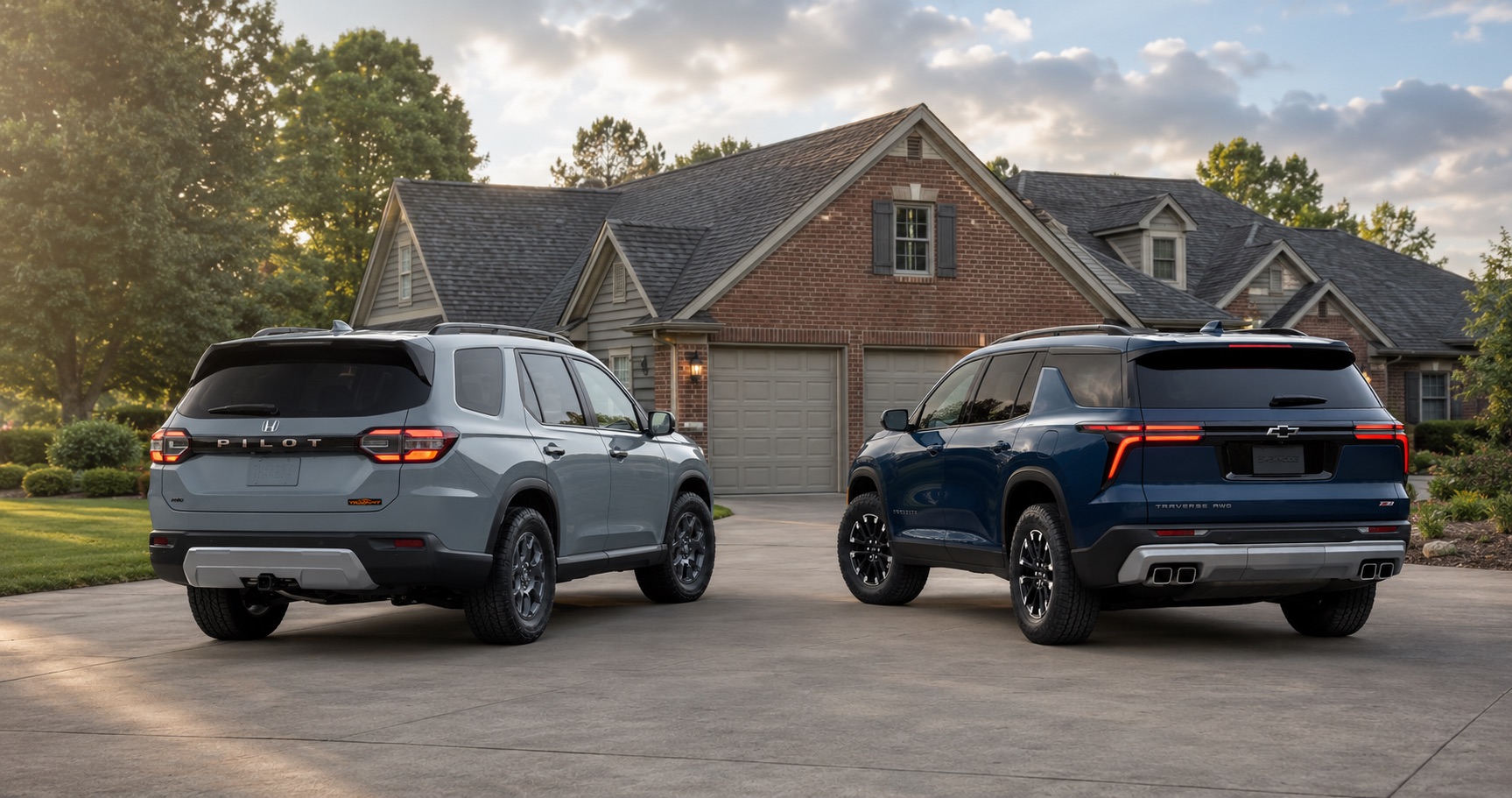
Cargo Measurements Need Context; Maximum Towing Can Reach 5,000 Pounds in Both
Traverse has more standard published cargo space at each seating stage, while the Pilot's maximum measurements add another layer to the comparison.
Cargo and Towing Comparison
Category
2026 Honda Pilot
2026 Chevrolet Traverse
Cargo Behind Row 3
18.6 cu ft standard measurement
22.9 cu ft
Cargo Behind Row 2
48.5 cu ft standard measurement
56.6 cu ft
Cargo Behind Row 1
86.5–87.0 cu ft standard measurement; trim dependent
98.0 cu ft
Maximum Towing*
FWD: up to 3,500 lbs AWD: up to 5,000 lbs
Up to 5,000 lbs
Honda also publishes maximum cargo measurements:
depending on trim and seating position, the 2026 Pilot is listed with up to
22.4 cubic feet behind the third row, 60.1 cubic feet behind the second row
and 113.7 cubic feet behind the first row. The standard Pilot measurements
above are used for the closest direct comparison with Chevy's published
Traverse figures.
Honda publishes both standard and maximum cargo measurements that vary by trim, while Chevrolet publishes one figure for each seating position. Cross-brand cargo-volume methods are not guaranteed identical, so use these figures as packaging references rather than a laboratory-identical ranking. Towing requires the proper vehicle, hitch/trailering equipment, loading and operating conditions.
Compare the Cargo Space You Actually Expect to Use
Traverse has the larger published figure when compared with the Pilot's standard cargo measurements at each seating stage, including 22.9 cubic feet behind the third row versus Pilot's 18.6. With the Pilot's maximum cargo measurements, capacity reaches up to 22.4 cubic feet behind row three, 60.1 cubic feet behind row two and 113.7 cubic feet behind row one. Because the manufacturers do not publish cargo volume on an identical basis, use the figures to narrow the decision, then compare the actual layouts with the passengers and gear you regularly carry.
If all three rows regularly stay upright for sports gear, luggage, strollers or Freeman Lake Park recreation equipment, the behind-row-three measurement deserves particular attention.
Weather & Weekends
TrailSport and Z71 Prioritize Different Adventure Hardware
Both go beyond a cosmetic appearance package.
AWD and Adventure-Use Comparison
Category
2026 Honda Pilot
2026 Chevrolet Traverse
AWD Availability
i-VTM4 AWD:
Available on Sport / EX-L
Standard on TrailSport and upper trims
AWD: available in the lineup Z71: advanced twin-clutch AWD is core hardware
Adventure Trim
TrailSport:
All-terrain tires
Off-road-tuned suspension
Skid plates
Recovery points
TrailWatch camera
Z71:
All-terrain tires
Off-road suspension
Skid plate
Terrain Mode
Hill Descent Control
Ground Clearance
8.3 inches TrailSport
About 7.8 inches Z71
Traction / Visibility Hardware
Trail Torque Logic: trail-focused torque management TrailWatch: camera views for low-speed obstacle placement
Adventure hardware supports traction and low-speed confidence but does not replace appropriate tires, safe speeds, route planning or vehicle-specific operating limits.
TrailSport Has More Clearance; Z71 Brings More Specialized AWD Hardware
Choose TrailSport when clearance, TrailWatch and Honda’s integrated trail package matter most. Choose Z71 when the twin-clutch AWD system and Chevy’s terrain-control approach are more compelling. For ordinary winter roads and family travel, a non-adventure AWD trim may be the smarter spend on either side.
Cabin & Driver Tech
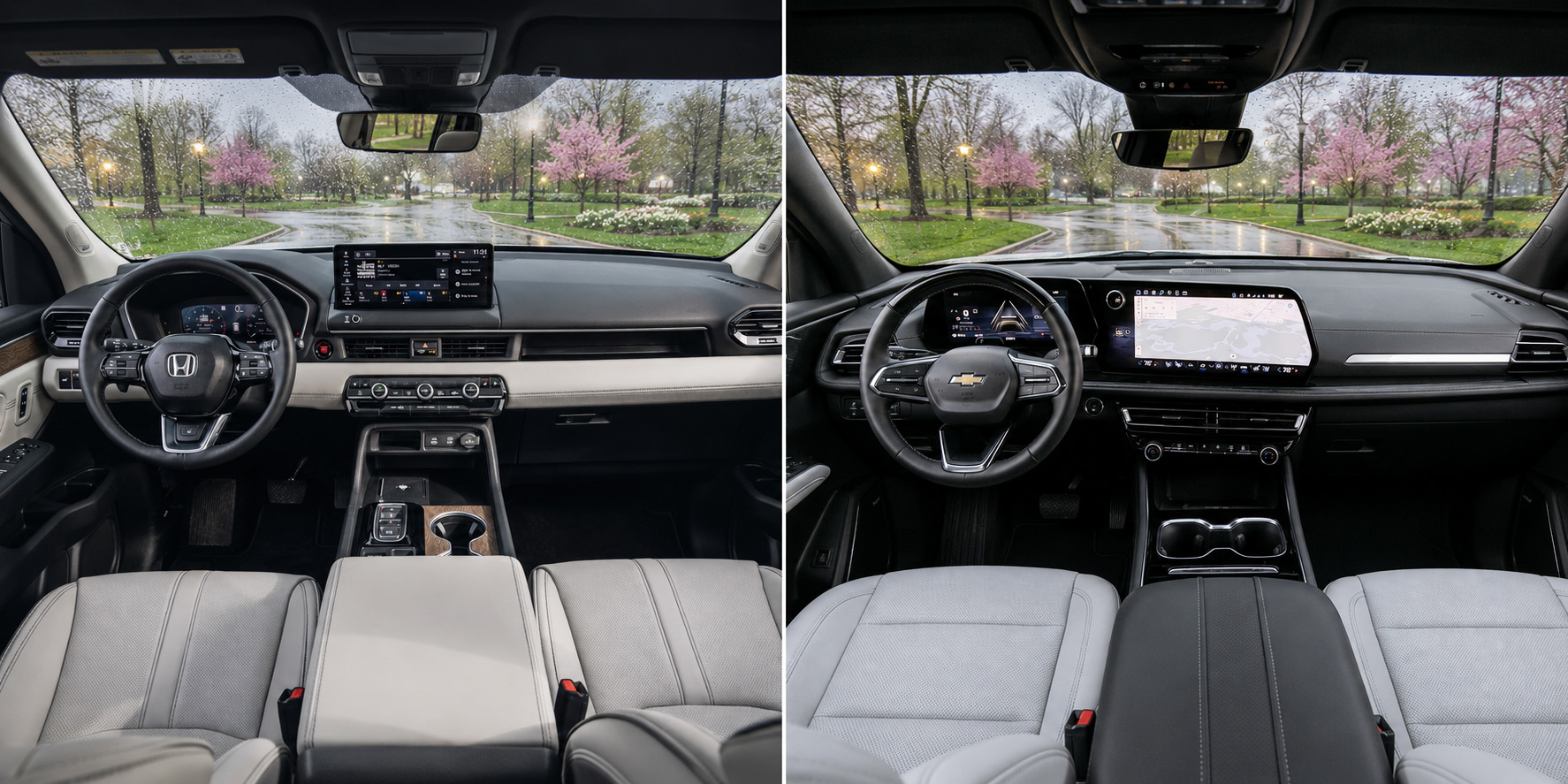
Pilot Raises the Core-Tech Floor; Traverse Makes the Bigger Screen and Super Cruise Play
The most meaningful tech separation is hands-free highway driving.
Technology, Comfort and Driver-Assistance Comparison
Category
2026 Honda Pilot
2026 Chevrolet Traverse
Main Displays
Standard:
10.2-in digital instrument cluster
12.3-in touchscreen
Standard:
11-in driver information center
17.7-in touchscreen
Google / Smartphone Integration
Standard:
Google built-in
Wireless Apple CarPlay / Android Auto
Standard:
Google built-in
Wireless smartphone integration
Google Gemini integration available through the connected system
Hands-Free Driving
Honda Sensing:
Adaptive cruise control with low-speed follow
Lane keeping / traffic support
Hands-free highway driving: not offered
Super Cruise:
Standard on High Country and RS
Available on LT and Z71 with the applicable package
Family Convenience
Available by trim:
CabinTalk
Multiview camera
Bose premium audio
Hands-free power tailgate
Available by trim:
Surround Vision
Power-folding rear seats
Bose audio
AutoSense power liftgate
Safety Foundation
Standard:
Collision mitigation braking
Road-departure mitigation
Adaptive cruise control with low-speed follow
Lane keeping assist
Standard:
Automatic emergency braking
Forward collision alert
Adaptive cruise control
Lane keep assist with lane departure warning
Feature availability and connected-service terms vary by trim, package and subscription status. Driver-assistance systems require an attentive driver and do not replace the driver’s responsibility to control the vehicle.
Super Cruise Is a Real Traverse Advantage—If You Will Use It
If hands-free compatible-road driving is high on your list, Traverse has the decisive feature. If not, Pilot still provides a strong standard interface without forcing a move to an upper trim. Compare display ergonomics and controls in person; screen size alone does not determine ease of use.
Ownership Context
Published Reliability Evidence Is Mixed, With Honda Stronger at the Brand Level
One current model-level source favors Pilot, another favors Traverse, and broader brand context favors Honda.
Chevrolet #17 brand-level 2026 new-car reliability rank
Current-Generation Context
Fourth generation introduced for 2023; refreshed for 2026. Several recent model years share the current-generation foundation.
Current generation introduced for 2024. The turbo-four/current-platform ownership record is newer than Pilot’s current generation.
Third-party reliability sources use different methodologies and should not be averaged into one composite. Consumer Reports figures shown here are brand-level rankings, not model-specific scores. Ratings were checked August 24, 2026 and may change as new ownership data becomes available.
Published Scores Split; Honda Adds Stronger Brand-Level Context
J.D. Power gives Traverse the model-level Quality & Reliability edge, while Auto Reliability Index favors Pilot and Consumer Reports gives Honda the stronger brand-level context. The useful conclusion is that reliability belongs in the tie-breaker conversation here, not as a clean head-to-head win for either SUV.
Price & Trim Strategy
Traverse Uses Four Broad Roles; Pilot Offers a Deeper Seven-Trim Ladder
The lower Traverse entry price is useful context, but role-to-role comparisons are more meaningful.
Trim Lineup and Starting MSRP Comparison
Category
2026 Honda Pilot
2026 Chevrolet Traverse
Entry & Core Trims
Sport: $42,395 EX-L: $44,695
LT: $40,800
Adventure Trim
TrailSport: $50,595
Z71: $48,900
Premium Trims
Touring: $51,295 Touring Blackout: $52,495 Elite: $53,695 Black Edition: $55,195
High Country: $55,100 RS: $55,400
Lineup Structure
Trim levels: 7 Powertrain: one V6 / 10-speed combination Drivetrain: FWD on Sport / EX-L or i-VTM4 AWD
Trim levels: 4 Powertrain: one turbo-four / 8-speed combination Drivetrain: FWD or AWD; Z71 centers on twin-clutch AWD
Buyer-Fit Shortcut
Sport / EX-L: family value TrailSport: adventure hardware Touring and above: premium comfort/technology
LT: family value and 8-seat option Z71: adventure hardware High Country / RS: premium tech with standard Super Cruise package
Starting MSRPs are shown for lineup context and can change. Honda prices exclude the $1,495 destination charge. Chevrolet prices exclude the $1,995 destination freight charge, tax, title, license, dealer fees and optional equipment.
Compare the Role You Would Actually Buy
Do not let the base MSRP decide a purchase that will happen several trim levels higher. Start with the role: family value, adventure hardware or premium technology. Then compare destination charges, drivetrain, packages and current dealer pricing for the exact configurations.
Independent Review Context
Car and Driver Highlights Different Family-SUV Strengths
The review evidence reinforces the same split found in the comparison: Pilot earns praise for ride quality, usable space and TrailSport capability, while Traverse stands out for passenger and cargo room, adult-friendly third-row space and available Super Cruise.
Car and Driver
2026 Honda Pilot
8.5/10 Rating
Agreeable ride. Room for people and gear. Real TrailSport usefulness.
Car and Driver highlights the Pilot's comfortable road manners, generous passenger and cargo space and TrailSport's ability to handle mild-to-moderate off-road terrain. In instrumented testing, a Pilot TrailSport reached 60 mph in 6.9 seconds.
Ample family space. Adult-usable third row. Super Cruise availability.
Car and Driver calls out the Traverse's room for people and cargo, its third-row usability and available Super Cruise as core strengths. In instrumented testing, an all-wheel-drive Traverse reached 60 mph in 7.3 seconds.
What the Score Gap Means: The Pilot's 8.5/10 rating is one point above the Traverse's 7.5/10 in Car and Driver's current reviews. That adds independent support to the Pilot's case for ride quality, family practicality and TrailSport capability, while the Traverse retains meaningful strengths in passenger and cargo space, third-row usability and available Super Cruise.
Use a Pilot Test-Drive to Check the Details That Matter in Daily Use
On a Pilot drive, check the removable center-seat setup, third-row access, visibility, V6 response, ride quality and the exact trim features your household would use every day. Bring the passengers, child-seat setup or cargo routine that makes the decision real for your household.
Traverse makes the clearest case when its stronger turbo output or available Super Cruise would change your weekly driving. Its small all-rows-up cargo edge can matter for families that keep every seat in use, and Z71 deserves a direct look if its twin-clutch AWD hardware matches your priorities.
Pilot makes the clearer case when the naturally aspirated V6/10-speed character or removable second-row center seat solves a repeated need, with TrailSport providing its distinct capability path. If neither SUV has a non-negotiable advantage, their close MPG and similar maximum towing ceiling shift the final decision toward seating fit, ride, exact trim equipment and current pricing.
Still split between them? The quick quiz below turns the established tradeoffs into five practical choices.
A Quick Decision Check
Answer 5 Questions to See Which 3-Row SUV Fits Better
Work through five practical questions about powertrain, packaging, highway technology, adventure hardware and trim strategy. The result can lean toward Pilot, lean toward Traverse, or stay balanced.
Question 1 of 50 of 5 answered
Which powertrain character do you want to live with?
Treat the quiz as direction rather than a verdict. Recheck the exact drivetrain, trim, seating configuration, trailering equipment, current pricing and your own driving impressions before deciding.
2026 Honda Pilot vs Chevrolet Traverse FAQs
Does the 2026 Chevrolet Traverse offer Super Cruise?▼
Yes. Super Cruise is standard on 2026 Traverse High Country and RS and available on LT and Z71 with the applicable Enhanced Driving Package. It operates only on compatible roads, requires an attentive driver and is subject to applicable connected-service terms.
Which has more power, the 2026 Honda Pilot or Chevrolet Traverse?▼
The 2026 Chevrolet Traverse has more output: 328 horsepower and 326 lb-ft of torque from its turbocharged 2.5-liter four-cylinder. The 2026 Honda Pilot makes 285 horsepower and 262 lb-ft from its naturally aspirated 3.5-liter V6.
Which has more cargo room, Pilot or Traverse?▼
There is no single cargo winner across every seating position. Traverse publishes 22.9 cubic feet behind a raised third row, while Pilot figures span 18.6 to 22.4 cubic feet by trim. With the rear rows folded, Honda publishes higher maximum Pilot figures. Because the manufacturers do not present cargo volume on an identical basis, compare the layout with the people and gear you actually carry.
Which seats eight, the 2026 Pilot or 2026 Traverse?▼
Both can seat up to eight in the right configuration. Most Pilot trims seat eight, while TrailSport seats seven. Traverse LT can seat eight with the available second-row bench; Z71, High Country and RS seat seven.
Which tows more, the 2026 Honda Pilot or 2026 Chevrolet Traverse?▼
Their maximum ratings can meet at 5,000 pounds. Pilot reaches 5,000 pounds with AWD and is rated up to 3,500 pounds with front-wheel drive. Traverse can tow up to 5,000 pounds with the required trailering equipment and proper configuration.
How do Pilot TrailSport and Traverse Z71 compare?▼
TrailSport emphasizes 8.3 inches of ground clearance, all-terrain tires, off-road-tuned suspension, skid protection, recovery points and TrailWatch. Traverse Z71 counters with advanced twin-clutch AWD, all-terrain tires, off-road suspension, a skid plate, Terrain Mode and Hill Descent Control.
Where can I test-drive a 2026 Honda Pilot near Elizabethtown and Fort Knox?▼
Hardin County Honda is located at 5608 North Dixie Highway in Elizabethtown, Kentucky, serving shoppers throughout Hardin County, the Elizabethtown–Fort Knox region and surrounding Central Kentucky communities. Check current 2026 Pilot inventory before visiting so you can focus the drive on the trim and drivetrain you are considering.
Hardin County Honda
Compare the Pilot Around the Way Central Kentucky Families Actually Drive
Hardin County Honda serves Elizabethtown, Radcliff, Vine Grove, Shepherdsville, Bardstown, Leitchfield, Brandenburg and the broader Fort Knox / I-65 corridor. For a three-row SUV decision, the most useful dealership step is practical: bring the passenger mix, child-seat plan, cargo routine and towing requirement you actually expect to use, then test the Pilot trim that matches it.
A family that spends the week on school, work and Fort Knox-area schedules may evaluate the Pilot very differently from a household loading lake gear, sports equipment or luggage for regional travel. The dealership’s current Pilot inventory, trade-value tools and finance paths let you move from the comparison into a specific vehicle, trade value and payment path in one place.
Where to Go Next
Choose Your Next Research or Shopping Step
Research Next
Keep Comparing the Options That Fit Your Priorities
Disclaimers: *Vehicle specifications, equipment, trim availability, connected-service terms, inventory and prices may be revised. Verify the exact vehicle before making a purchase decision. *Honda Pilot starting MSRPs in this guide exclude the $1,495 destination charge. Chevrolet Traverse starting MSRPs exclude the $1,995 destination freight charge, tax, title, license, dealer fees and optional equipment. *Fuel-economy figures are EPA estimates for comparison. Actual mileage varies with equipment, weather, loading, maintenance, traffic and driving style. *Honda publishes both standard and maximum cargo figures by trim, while Chevrolet publishes one figure for each seating position. Cross-brand cargo-volume methods are not guaranteed identical, so use the figures as packaging references and verify the space with the load you actually expect to carry. Towing requires the proper vehicle configuration, hitch/trailering equipment, loading and adherence to all vehicle and trailer limits. *Super Cruise, Honda Sensing and other driver-assistance systems have operating limitations and require an attentive driver. Feature availability and connected-service terms vary by trim, package and subscription status. *Car and Driver review observations and instrumented test results were checked August 24, 2026 and may be updated later. Test results reflect the specific vehicles tested. *Auto Reliability Index, J.D. Power and Consumer Reports reliability results were checked August 24, 2026. Their methodologies differ; Consumer Reports figures shown are brand-level rankings, not model-specific ratings. *Hardin County Honda inventory, pricing, offers, finance tools and trade tools can change. Confirm current vehicle-specific details when you shop.